

Domestic electrical systems in Germany – what are you allowed to do yourself and where do you need an electrician?
Teilen
Anyone looking to make their home smarter is often faced with the question: Am I actually allowed to install this myself, or do I need an electrician? Uncertainty is common, especially when setting up smart home devices, new switches, or additional power outlets.
In Germany, legal regulations specify very precisely what you are allowed to do yourself and when a qualified electrician must be involved. There is a reason for these rules – they protect you and your home from electric shocks, fires, and outages. Here you will find out what is permitted and where the limits lie.
What are you allowed to do yourself?
In the field of smart homes, you have many opportunities to take matters into your own hands – as long as you do not interfere directly with the fixed electrical installation. The following work can easily be done on your own:
- Connecting lamps – If the wiring is already in place, you are allowed to mount a new ceiling lamp or replace an old light fixture.
- Replacing outlets and switches – You can replace defective outlets or old light switches with new models, including smart versions.
- Setting up smart home devices – You can install and integrate smart plug adapters, battery-operated sensors, or smart radiator thermostats yourself.
- Laying extra-low voltage cables – For voltages below 50V (e.g., for smart doorbells or garden lighting), you are allowed to lay the cables yourself.
With the smart outlets, wireless switches, and sensors from the Smartdomo range, you have a large selection of devices that can be integrated without expert knowledge and without interfering with the electrical installation.
This work is for an electrician
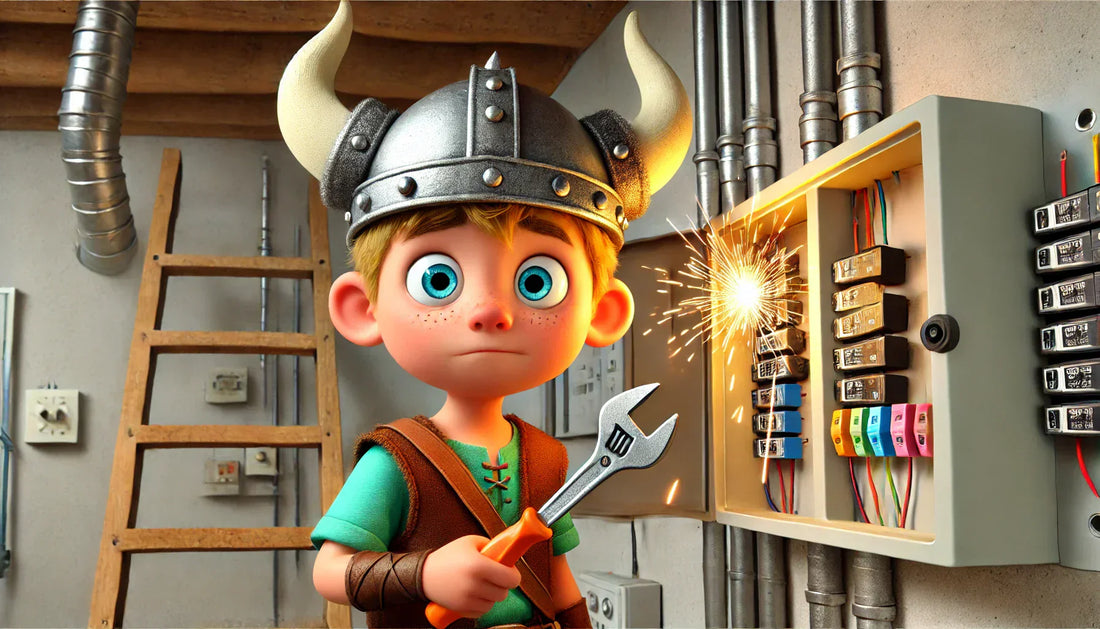
As soon as it involves fixed installations or affects the home distribution board, you must not take matters into your own hands. This work belongs in the hands of a certified electrician:
- Installing new outlets or light switches if new cables need to be laid for them.
- Work on the sub-distribution or fuse box – regardless of whether it is a new circuit for a wallbox or the integration of a PV system. Unfortunately, you are also not allowed to install a power strip in the fuse box, for example—even if the connection is led into the fuse box from the outside. The only things that should be permissible (the legal situation here is not 100% clear) are low-voltage connections (e.g., a USB cable through the designated cable ducts of the fuse box) and battery-operated sensors like electricity readers.
- Connecting devices with a three-phase current connection (400V) – this applies, for example, to electric stoves, heat pumps, or instantaneous water heaters.
- Laying flush-mounted cables in walls – even if you cut the slots yourself, the wiring must be checked and approved by an electrician.
Why do these requirements exist?
In short: Safety. Improper work on home electrical systems is one of the most common causes of fires in private households. Incorrect connections or overloaded circuits can lead to dangerous situations—from electric shocks to cable fires.
Furthermore, in the event of a claim, insurance companies often require proof that the installation was carried out professionally—especially for larger renovations such as the integration of wallboxes or PV storage units.
Smart Home: You can do a lot yourself
The good news is that you can install most smart home devices from our Smartdomo range yourself. Especially popular are:
- Smart plug adapters – simply plug in, connect, done.
- Wireless switches and dimmers – smart surface-mounted solutions without interfering with the home installation.
- Battery-operated sensors – door/window contacts, room climate sensors, or motion detectors that can be installed wirelessly.
If you are unsure whether an installation can be done on your own or if a qualified electrician is required, we at Smartdomo are happy to help.
Conclusion
You can shape many areas of a smart home yourself—without interfering deeply with the house's electrical system. However, as soon as it comes to fixed electrical installation, you should rely on the expertise of a qualified electrician.
Note:
This is not legally binding information, but merely the result of our research! If any information is incorrect or missing, we would be very grateful for a tip sent to info@smartdomo.de.